
10+
Restaurants live at launch
5
Panels, from customer app to admin
Food and beverage SaaSNew York, USA
One ordering platform, with every restaurant under its own brand.
Read story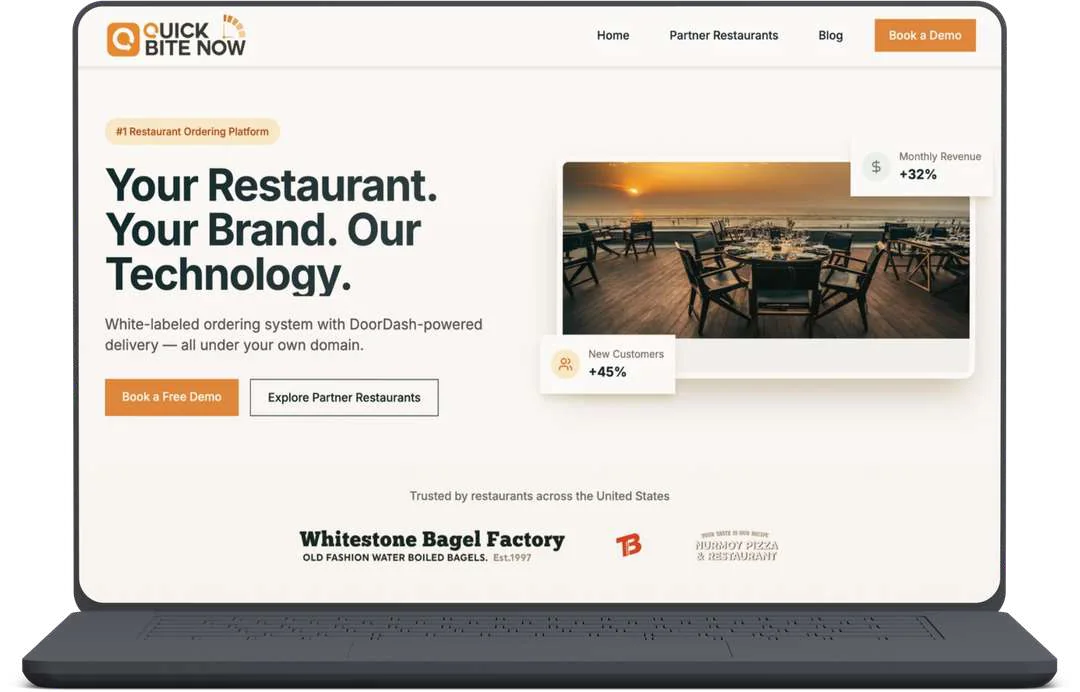
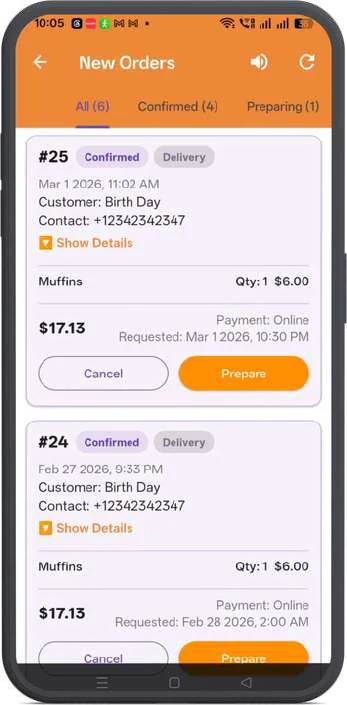
Quick Bite NowWhite-label restaurant ordering, New York
From New Delhi, we build the platforms businesses run on: multi-tenant SaaS, EHR systems, ordering platforms, HR tools and accounting software.
















Custom software development means designing and building an application for one organization's process, instead of bending that process to fit a packaged product. It costs more up front. It pays off when the process is what sets you apart, or when several tools need to act as one.
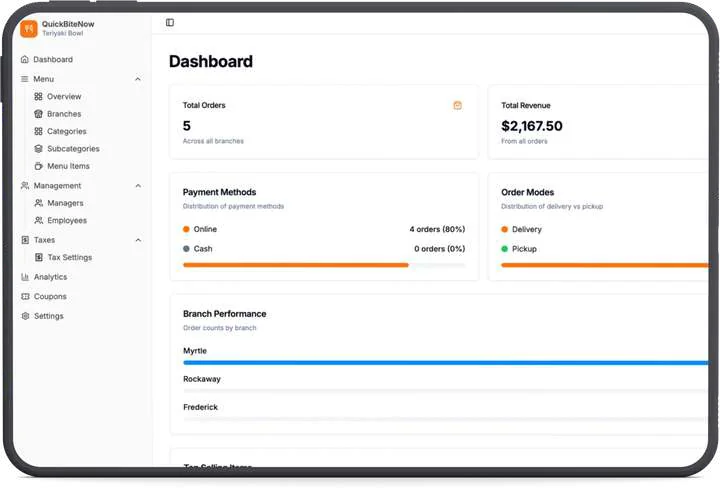
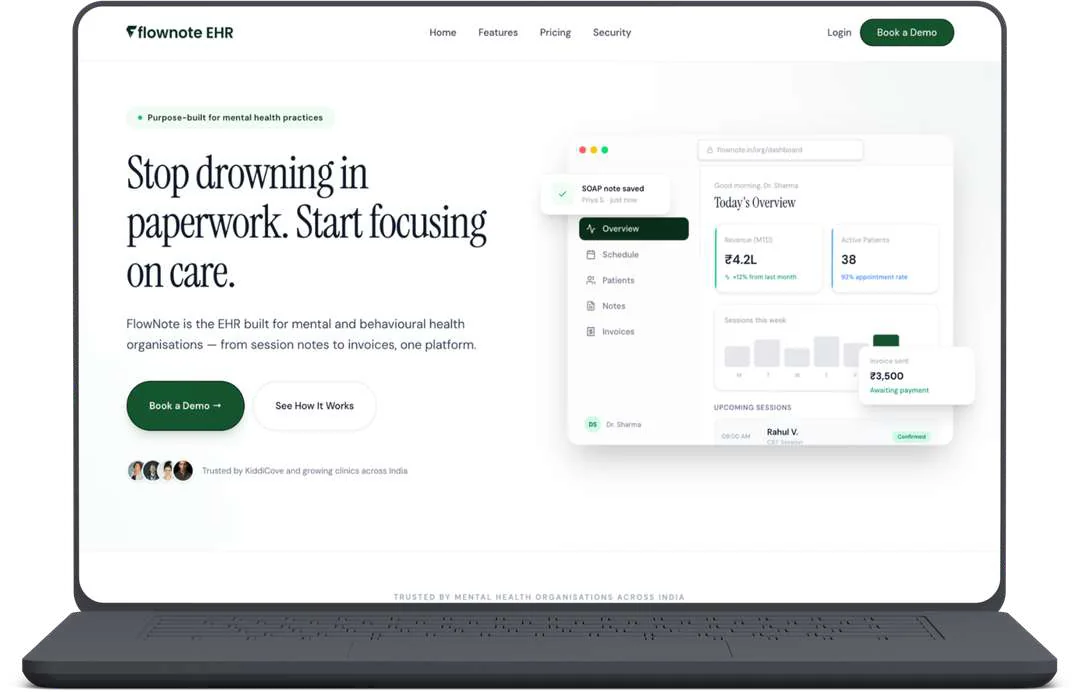
Quick Bite Now gives each restaurant its own brand on one multi-tenant platform, with more than 10 restaurants live at launch. Flownote runs pediatric clinics and child development centers. RMPL handles attendance, leave and location tracking for staff across India, and Jon Media's accounting system connects to more than 10 payment gateways.
Each stage ends with something you can review, test or use.
Users, roles, data and integrations, written down and priced.
Clickable screens your team tests before we write production code.
Backend, web app, admin panel and mobile app, reviewed in short cycles.
Deployment, monitoring, documentation and fixes after go-live.
Building is the right answer less often than software companies suggest. This is how we'd weigh it.
| Item | Off-the-shelf product | Configure a platform (such as Odoo) | Custom software |
|---|---|---|---|
| Fit to your process | You adapt to it | Mostly fits, with limits | Built around you |
| Up-front cost | Lowest | Medium | Highest |
| Ongoing cost | Subscription per user | Licences plus a partner | Hosting and maintenance |
| Time to start | Days | Weeks | Months |
| Who controls the roadmap | The vendor | The vendor, plus your add-ons | You |
| Choose it when | Your process is standard | You need many standard modules | The process is your advantage |
You get a written scope and price before build work starts. If the scope changes, we talk before anything is billed.
11
Software products in our current portfolio.
10+
Payment gateways integrated on a single accounting platform.
You see the product, not status reports.
Each cycle ends with something you can use.
We talk to the people who do the work, look at the tools they already use, and write down the one outcome this project has to deliver.
You get a written scope, a stack and a plan. Anything that launch doesn't need gets moved to a later phase, so the first release stays small enough to ship.
We build in short cycles and put working software in front of you as we go, on real data wherever we safely can. You see progress in the product, not in a status deck.
We hand over with training and documentation, watch the first weeks closely, and stay available to fix and extend what we built.
10+
Restaurants live at launch
5
Panels, from customer app to admin
636K+
Records managed on the platform
4
Pieces delivered, from SaaS to WhatsApp

It depends on the number of user roles, platforms and integrations. Published price ranges vary widely, so we'd rather scope your project and give you one written price. Regulated data, payments and multi-tenancy each add real work, and they're the first things to discuss.
Buy if a product already covers most of your process and the gaps don't matter. Build when the process is your advantage, or when you're stitching together so many tools that staff act as the integration. We'll tell you when buying is the better answer.
Multi-tenant means many customers share one application, with each customer's data kept apart. AWS describes the options as silo (dedicated resources), pool (shared resources) and bridge (a mix). You need it if you plan to sell to many organizations. For a single company's internal tool, you don't.
Most often Next.js, Node.js or NestJS, PostgreSQL and Flutter, on AWS or Google Cloud. We also work in Django, Laravel, Vue and Angular when a project calls for them, so the choice follows the problem and your team.
Yes, after a short audit. We read the code, run it, and tell you what's safe to keep, what needs fixing first and what it would cost before you commit.
Both. Quick Bite Now and FitQuest are founder-led products, and Regard Network and RMPL are established organizations. We ask the same question of each: what does the first release have to prove?
Show us the sheet. We'll tell you what software would replace and what it should leave alone.